
Do Property Prices Fall After Buying? A Common Myth Among PSU Employees
Do Property Prices Fall After Buying? A Common Myth Among PSU Employees
Apr 02, 2026

Many PSU employees believe that property prices fall immediately after buying.
Because of this belief, property decisions often get delayed for years.
People keep waiting for the “right time”.
They think maybe prices will come down further.
They feel it is safer to wait.
But while waiting, time keeps passing.
1 year passes.
3 years pass.
Sometimes even 5–10 years pass.
And later, many people realise that the delay was not because of lack of opportunity, but because of confusion.
This blog explains the reality behind this common belief and helps PSU employees think more clearly before making property decisions.
Why This Fear Is Very Common.
PSU employees usually prefer stability and security.
They are careful decision makers.
They do not like unnecessary risk.
They do not want financial stress.
They want to avoid mistakes.
Because property investment usually involves a large amount of money, it naturally creates pressure.
People ask themselves:
What if the price falls after I buy?
What if I buy at the wrong time?
What if I could have bought cheaper later?
These questions create hesitation.
And hesitation often delays action.
Do Property Prices Always Fall After Buying?
Real estate markets do not move in a straight line.
Prices do not continuously go up every month.
Prices do not continuously go down every month.
Markets usually move in cycles.
Sometimes prices increase fast.
Sometimes growth is slow.
Sometimes prices remain stable for a period of time.
Short-term fluctuations are normal in any market.
But many people interpret short-term movement as a wrong decision.
For example:
If someone buys property and prices remain stable for 6–12 months, they may feel that the decision was wrong.
But real estate is usually a long-term asset.
It is not usually evaluated in months.
It is evaluated over years.
The Psychology Behind This Belief.
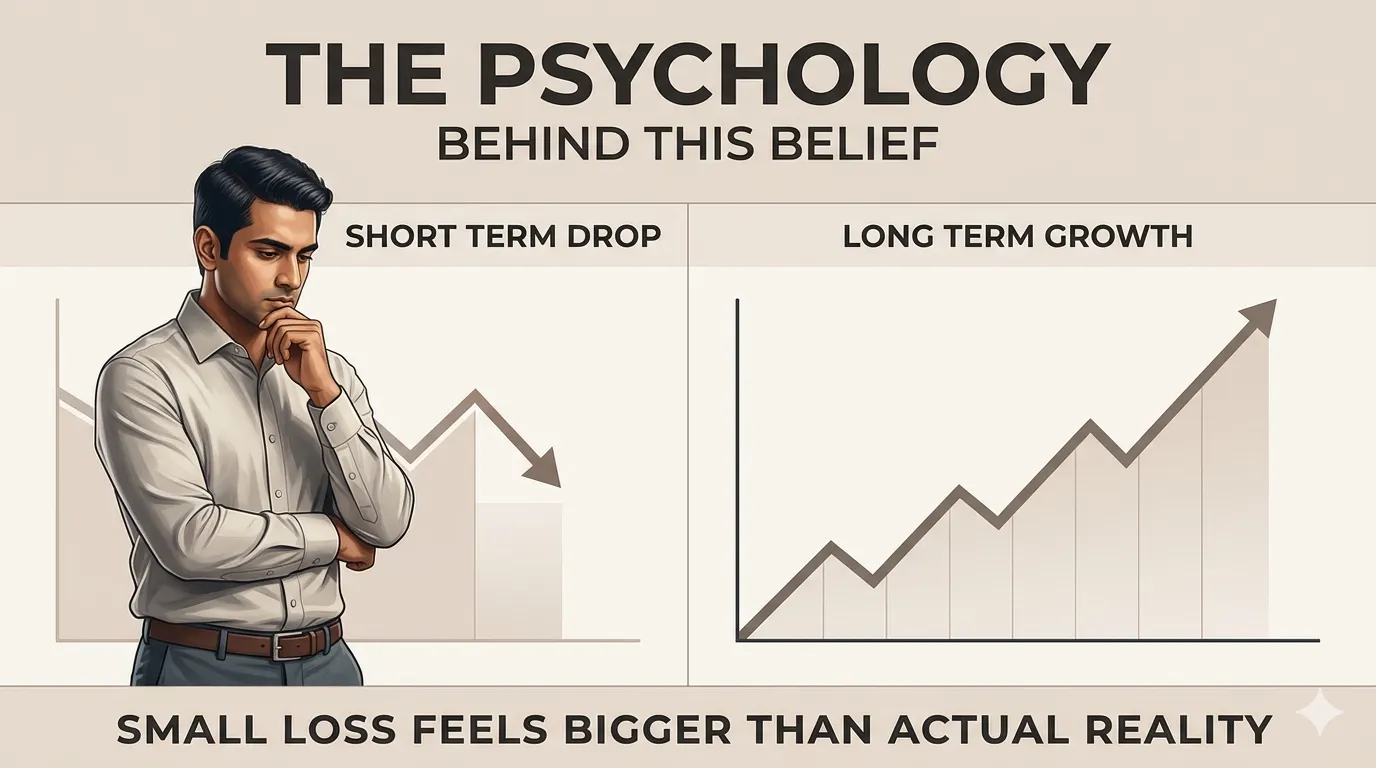
Human psychology focuses more on loss than gain.
Even a small temporary drop in price can create discomfort.
People feel regret quickly.
But long-term growth is often ignored in the beginning.
This creates a perception that property prices always fall after buying.
In reality, it is often just short-term fluctuation combined with emotional reaction.
Influence of Other People's Opinions.
Many decisions are influenced by stories from others.
Someone says:
“I bought property and prices did not increase for some time.”
Someone says:
“Market is slow right now.”
Someone says:
“Prices may fall soon.”
But every location is different.
Every project is different.
Every time period is different.
One experience cannot define the entire market.
Real estate value depends on factors such as:
Location demand
Infrastructure development
Population growth
Connectivity
Usability
Long-term demand
Understanding these factors is more helpful than reacting to isolated opinions.
Better Questions to Ask Before Buying Property.
Instead of asking:
Will prices fall after I buy?
It may be more useful to ask:
Is the location strong?
Is there real demand in this area?
Can the property be used practically?
Is the loan comfortable?
Is the EMI manageable?
Can the property be held for long term?
Is the decision being taken calmly?
These questions help create clarity.
Clarity reduces confusion.
Confusion often creates unnecessary fear.
PSU Employees Have a Natural Advantage.
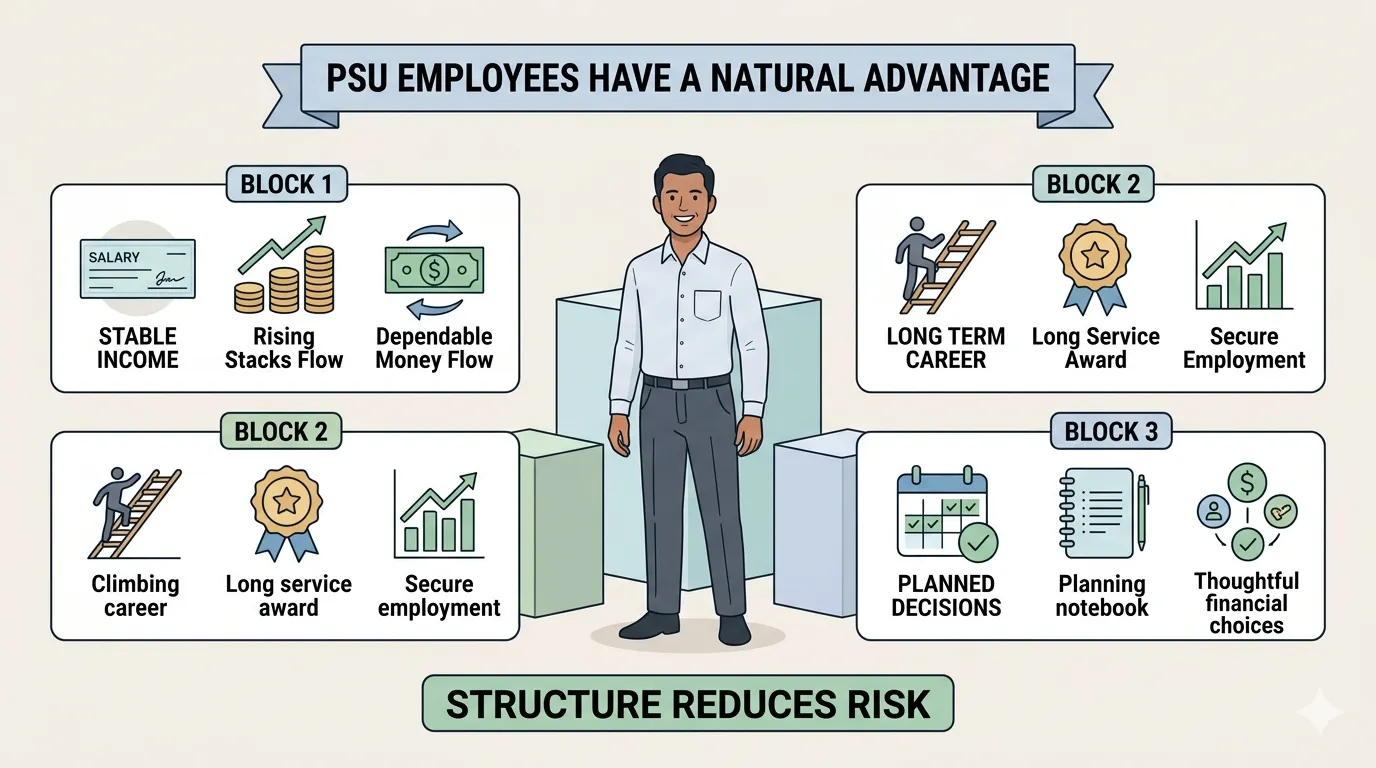
PSU employees usually have stable income structures.
Their careers are often long-term.
They are used to planning ahead.
They understand responsibility.
This mindset can be helpful in property decisions.
Instead of focusing only on short-term price changes, PSU employees can focus on long-term stability.
Patience and structured thinking can help avoid emotional decisions.
Perfect timing is difficult to predict.
But informed decision making is possible.
Importance of Long-Term Thinking in Real Estate.
Real estate is generally considered a long-term asset.
Short-term fluctuations can happen.
But long-term demand often plays a bigger role.
Property decisions are often connected with:
Family stability
Future planning
Rental income potential
Inflation protection
Financial discipline
When the purpose is long-term stability, short-term fluctuations become less stressful.
Clarity vs Perfect Timing.
Many people wait for perfect timing.
But perfect timing is difficult to identify consistently.
Waiting for perfect conditions can sometimes delay progress.
Clarity is often more helpful than perfect timing.
When decisions are based on understanding, they feel more stable.
When decisions are based on fear, they feel more stressful.
Calm and Structured Decision Making.
Property decisions do not need urgency.
They need clarity.
They need understanding.
They need logical evaluation.
Observe carefully.
Understand the fundamentals.
Evaluate responsibly.
Decide calmly.
Confidence develops naturally when decisions are based on knowledge.
Conclusion.
The belief that property prices always fall after buying is a common myth.
Short-term market movement is normal.
But long-term decisions should not be based only on short-term changes.
PSU employees already have strengths such as patience, planning ability, and long-term thinking.
These strengths can help in making practical property decisions.
Clarity reduces fear.
Understanding improves confidence.
Structured thinking reduces regret.
Property decisions should not be taken in panic.
And they should not be delayed only because of fear.
Learn calmly.
Think logically.
Decide responsibly.
For structured guidance for PSU employees, visit
www.psuemployees.com