
How PSU Employees Can Judge Rental Potential Before Buying Property
How PSU Employees Can Judge Rental Potential Before Buying Property
Mar 15, 2026

For many PSU employees, buying property often comes with a practical expectation — rental income.
The assumption feels logical.
Buy a flat.
Give it on rent.
Let rental income support EMI.
Sometimes this works well.
But sometimes even good-looking properties remain vacant for months.
The reason is simple.
Rental demand does not depend only on the property.
It depends on the ecosystem around the property.
Why Rental Demand Is Not Automatic.
Many first-time buyers evaluate property like owners.
They focus on:
• building design
• amenities
• brochure promises
• brand perception
But tenants evaluate differently.
Tenants think about daily life.
They prioritize:
• commute convenience
• routine comfort
• predictable expenses
Because of this difference in thinking, rental outcomes often vary across locations within the same city.
The Core Principle: Rental Demand Comes from Ecosystem.
Rental potential depends largely on three practical factors.
1. Employment Drivers Around the Area.
Areas close to job hubs usually attract stable tenant demand.
For example:
• industrial clusters
• PSU zones
• hospitals
• universities
• IT parks
The logic is simple.
Jobs create housing demand.
Locations with consistent employment activity tend to experience lower vacancy periods.
2. Connectivity and Daily Commute Convenience.
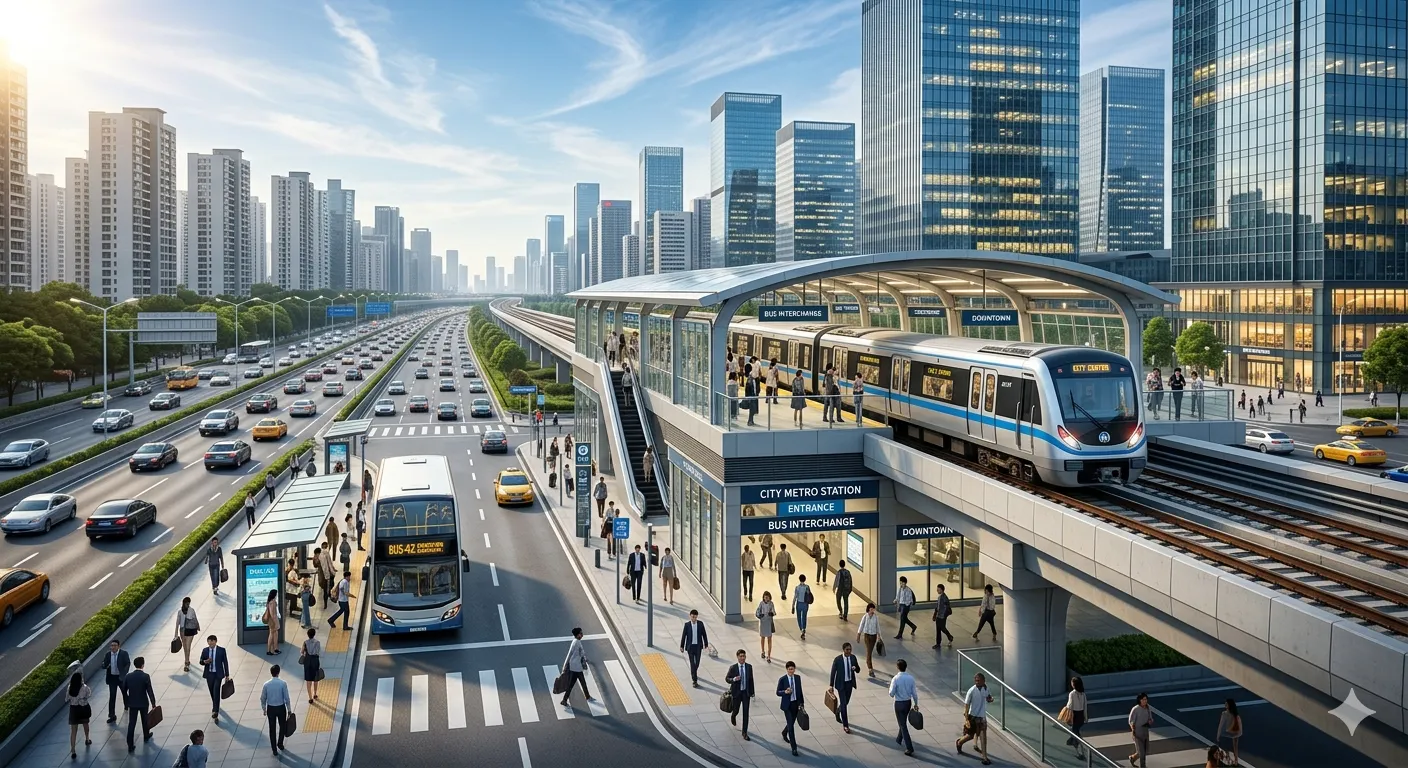
Tenants often value connectivity more than apartment size.
Properties near:
• metro stations
• bus routes
• highways
• office corridors
usually attract tenants faster.
In many cities, a smaller apartment near transport rents faster than a larger unit in an isolated township.
3. Daily Living Infrastructure.
Tenants prefer functional neighbourhoods.
They evaluate:
• grocery access
• schools
• clinics
• safety
• walkability
Convenience influences not only occupancy but also tenant retention.
The Hidden Factor: Affordability.
Even well-designed properties may remain vacant if rent exceeds local affordability.
Before buying property, it helps to observe:
• nearby rental listings
• local salary levels
• realistic rent expectations
Rental sustainability depends on matching local income patterns.
PSU-Specific Insight.
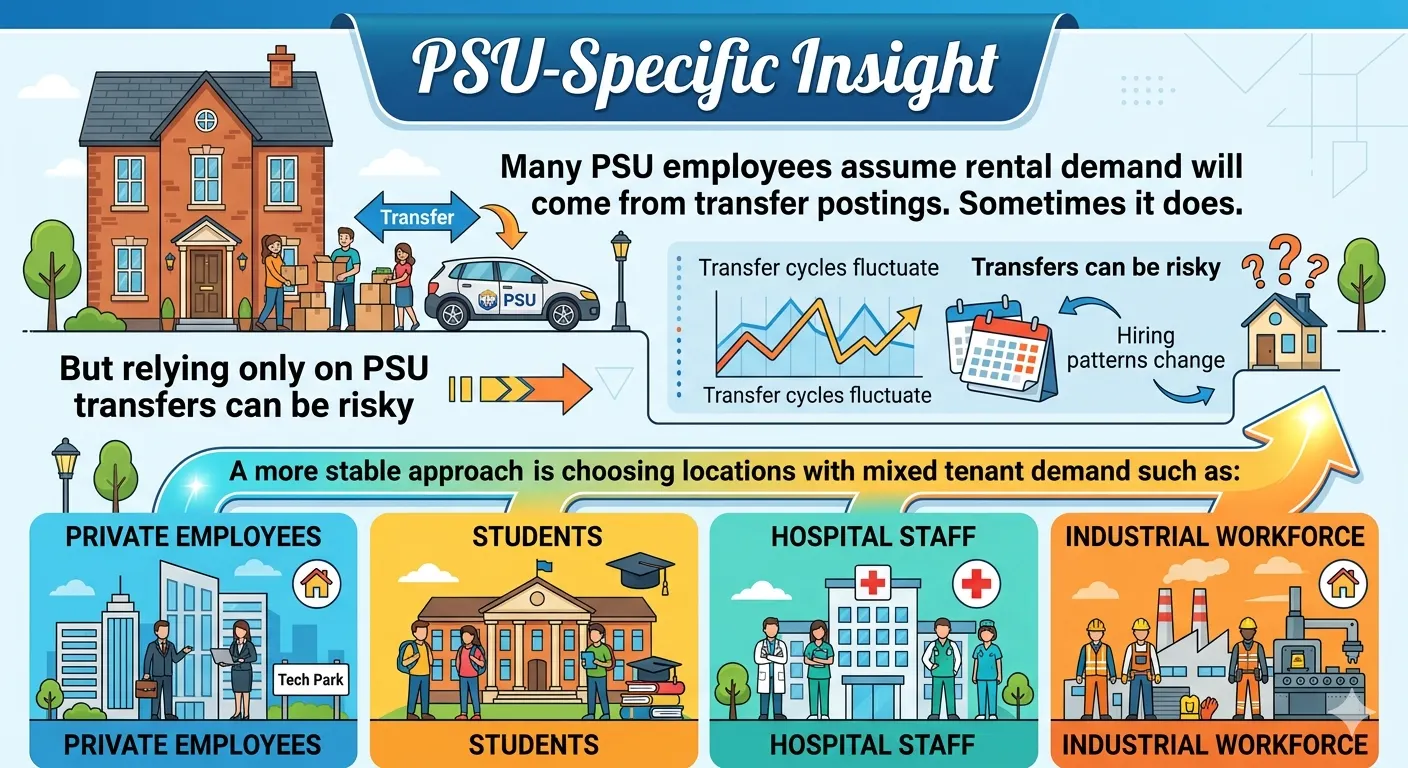
Many PSU employees assume rental demand will come from transfer postings.
Sometimes it does.
But relying only on PSU transfers can be risky.
Transfer cycles fluctuate.
Hiring patterns change.
A more stable approach is choosing locations with mixed tenant demand such as:
• private employees
• students
• hospital staff
• industrial workforce
This diversification strengthens rental stability.
A Practical Evaluation Framework.
Before buying property for rental income, ask five simple questions:
1️⃣ Who will live here?
2️⃣ Where will they work?
3️⃣ How will they commute?
4️⃣ Can they afford the rent?
5️⃣ Is the area active throughout the year?
Thinking like a tenant often reveals more than marketing brochures.
Conclusion.
Rental income does not come automatically with ownership.
It comes from understanding tenant behaviour.
For PSU employees, calm observation and structured evaluation can reduce vacancy risk and improve long-term stability.
Before buying property, ask one simple question:
If I were moving to this city today, would I rent this home?
Outro.
At PSU Employees Homebuild, we believe real estate decisions should be calm and practical. Dr. Anju Meena (Founder, PSU Employees Homebuild Pvt. Ltd.)
and our team have seen that rental success comes from understanding tenant behaviour and local ecosystem, not assumptions.
Before buying property, always think like a tenant.
For more structured real estate clarity, follow PSU Employees Homebuild.