
Why Many PSU Employees Face Low Rental Yield After Buying Property?
Why Many PSU Employees Face Low Rental Yield After Buying Property?
Apr 29, 2026

Many PSU employees believe that buying a property automatically means earning good rental income in the future.
After handling office work, meetings, reports, family responsibilities, and financial pressure, real estate often feels like a smart long-term decision.
Many people think that once they buy a property, monthly rent will start coming regularly and create passive income.
But reality can be very different.
Many employees invest ₹40 lakh, ₹50 lakh, or even ₹70 lakh in property expecting strong rental returns.
Later, they realize that the rent they are receiving is far lower than expected. In some cases, the property remains vacant for months.
In other cases, maintenance costs reduce overall returns. This situation is called Low Rental Yield.
1. What Is Low Rental Yield?
Low rental yield simply means your property is generating less rental income compared to the total amount you invested.
For example, if you buy a property worth ₹60 lakh and earn only ₹12,000 per month in rent:
Annual Rent = ₹1,44,000
Rental Yield = Annual Rent ÷ Property Cost × 100
Your rental yield becomes approximately 2.4%.
Now if maintenance charges, repairs, brokerage, and vacancy periods are added, your actual return becomes even lower.
This is where many investors feel disappointed because their expectations were much higher.
2. Why Does This Problem Happen?.
Many buyers purchase property based on emotional decisions instead of proper research.
Some common reasons include:
- Builder promises high future growth
- Friends share success stories
- Family members push for quick decisions
- Fear of missing out on market opportunities
- Lack of rental market research
Many PSU employees are already busy with professional responsibilities, transfers, deadlines, and personal commitments.
Because of limited time, they sometimes make quick decisions without checking actual rental demand.
This creates a gap between expectations and real market performance.
3. What Should You Check Before Buying Rental Property?
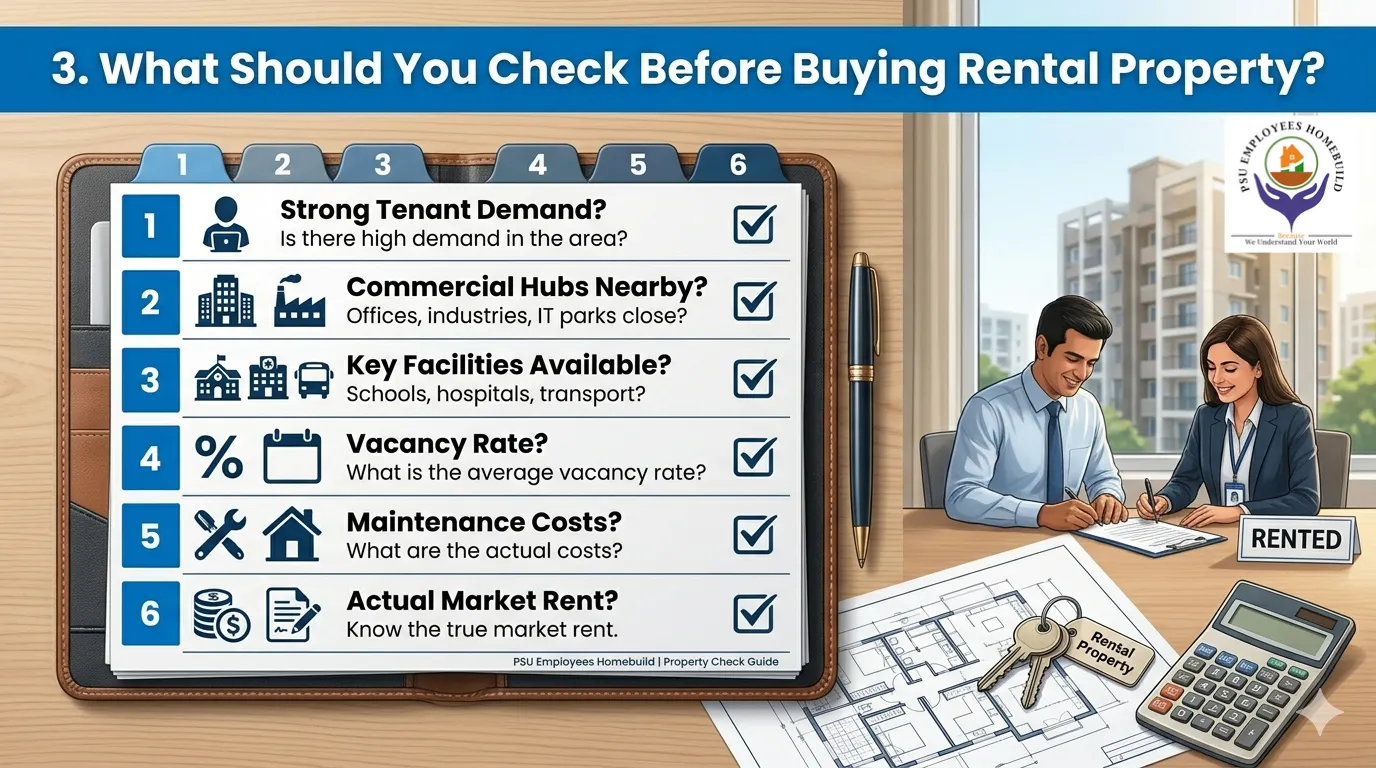
Before purchasing property for rental income, always check these factors:
- Is there strong tenant demand in the area?
- Are offices, industries, IT parks, or commercial hubs nearby?
- Are schools, hospitals, and transport facilities available?
- What is the vacancy rate in that location?
- What are the maintenance costs?
- What is the actual market rent in that area?
Never rely only on builder marketing presentations. Always verify real market data.
4. A Simple Real Example
Suppose Employee A buys a ₹55 lakh property because of marketing promises. He expects ₹25,000 monthly rent.
Actual rent becomes only ₹11,000.
The property remains vacant for two months.
Maintenance charges continue.
His returns become weak.
Now Employee B spends time understanding rental demand and chooses a better location with stronger tenant demand.
His rental income remains more consistent.
The difference was not luck.
The difference was better education.
5. Why Education Matters
Dr. Anju Meena has helped many PSU employees avoid costly real estate mistakes by focusing on education before transactions.
The goal is simple — help employees make calmer and smarter real estate decisions.
Real estate can be a powerful wealth-building tool when done correctly.
But rushed decisions can create long-term stress.
Before buying any rental property, ask yourself one question:
Have I studied actual rental demand... or am I simply making assumptions?
Learn daily. Observe patiently. Decide calmly.
For daily real estate education, visit: